
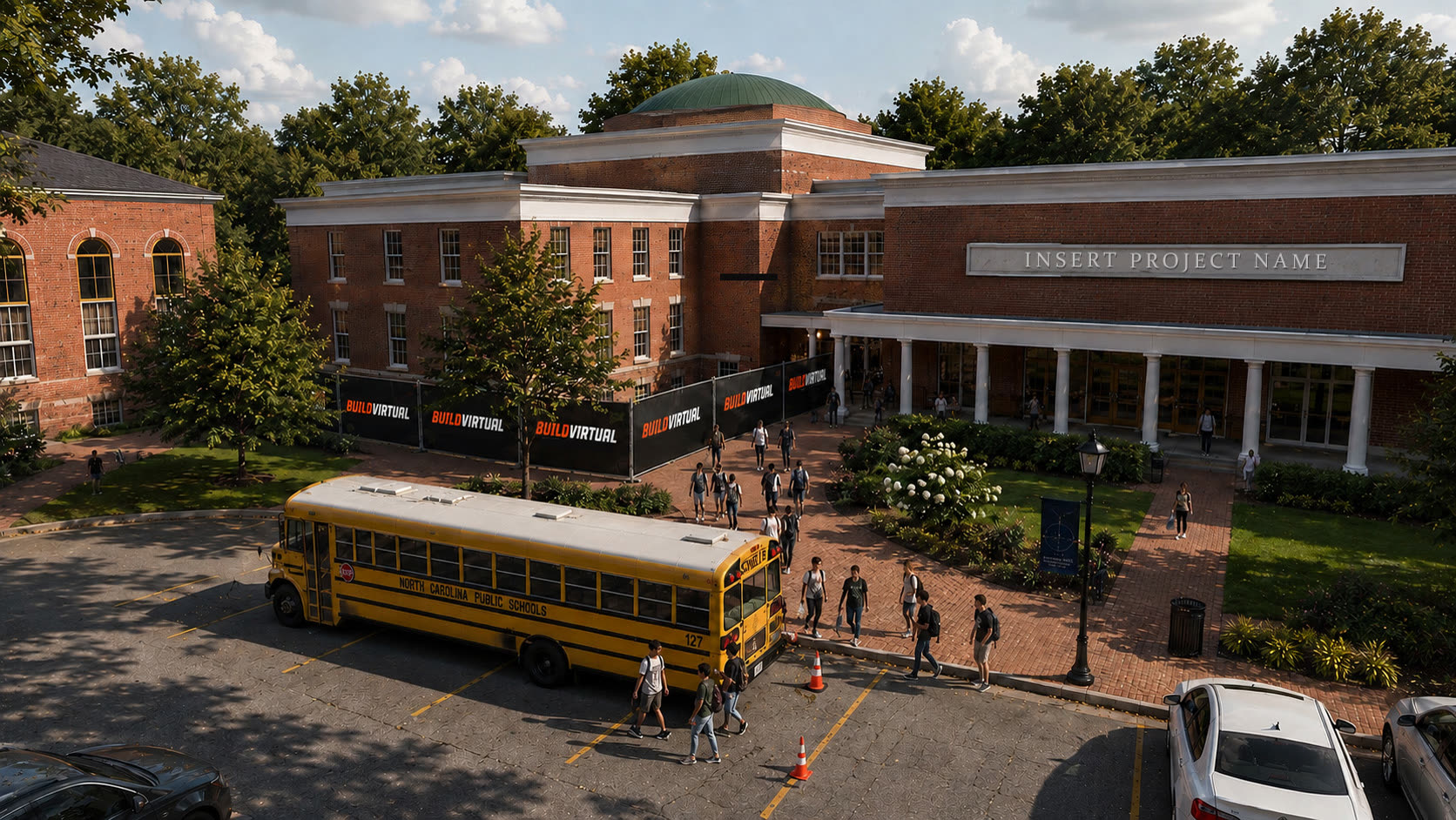

If you’re on a pursuit team, you already know the room. Three or four qualified general contractors, a selection committee that has read every proposal, and a decision that often comes down to one question they rarely say out loud: which of these teams do we actually trust to build this? A 4D construction animation is one of the most direct ways I know to answer that question — because instead of telling the committee your plan, you let them watch it come out of the ground.
I came at this from a slightly unusual direction. I started out in a contractor’s marketing department as a graphic designer, chasing and supporting one competitive pursuit after another. Within my first year I’d taught myself 3D modeling and started building construction animations to help our teams win work — and what stuck with me was how clients reacted. They’d leave the room genuinely engaged, the animation having brought their project to life in a way they remembered long after the bullet points faded. I’ve been building winning pursuit visuals ever since. Over 10+ years in construction and virtual design and construction — about four of them on-site, the rest on the office and VDC side — that’s been the throughline. So this isn’t a pitch dressed up as a guide. It’s the same way I’d talk you through whether an animation will move the needle on your next one.
Why a visual moves a committee that’s already read everything
Here’s the honest mechanism, because the answer isn’t “animations are impressive.” By the time you’re in the interview, every team in the room is qualified. Your proposal is strong, your references check out, your price is in range. What separates the winner is usually confidence — the committee’s confidence that your team has genuinely thought through how this specific building gets built on this specific site.
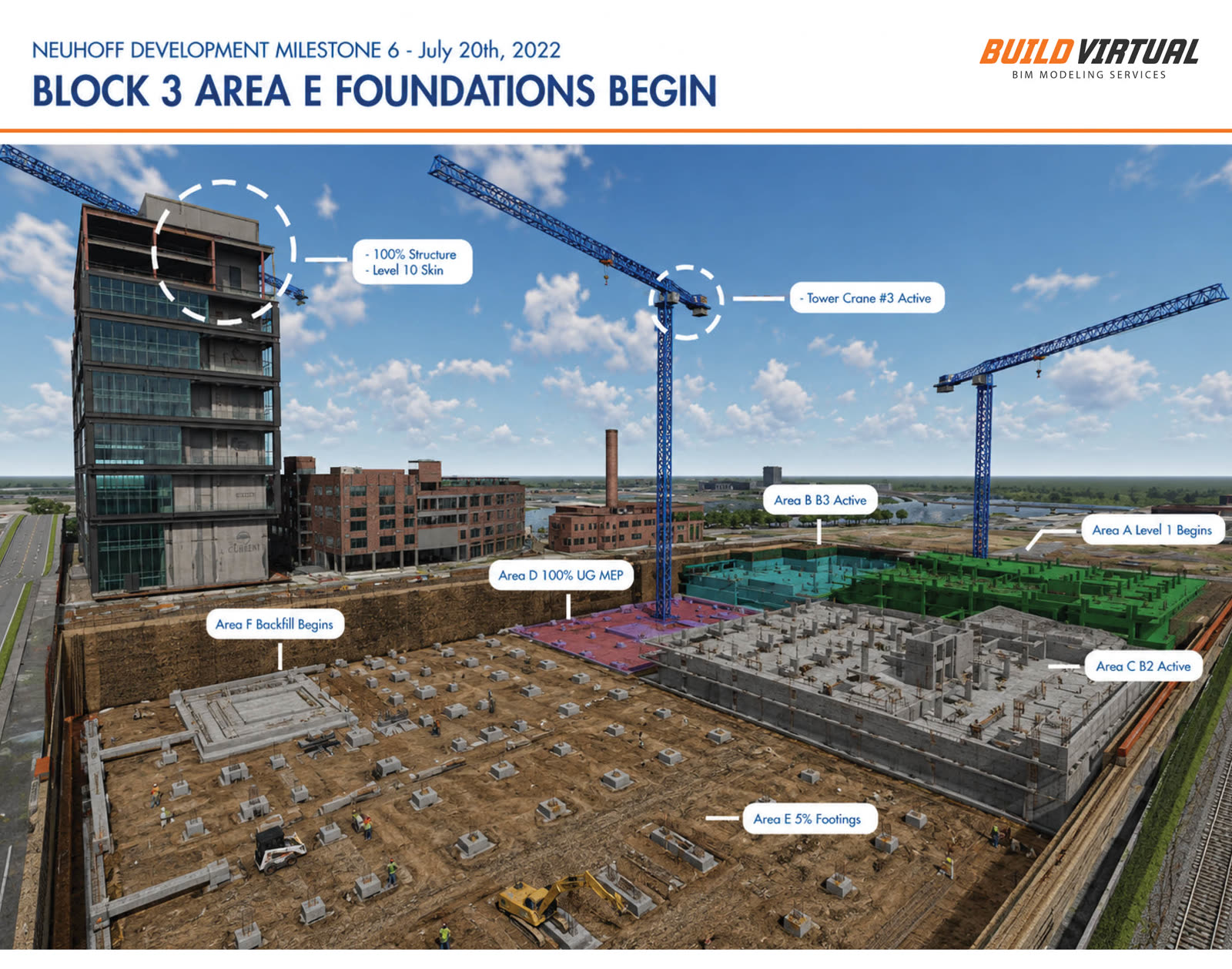
A written narrative asks them to take your word for it. A 4D construction animation shows them. When the panel watches your tower crane go up, your excavation phase clear, your structure rise floor by floor, and your site stay open and safe through all of it, your approach stops being a claim and becomes something they’ve seen. That shift — from described to demonstrated — is the whole game. It’s also a great equalizer: a regional GC with a clear, buildable visual can out-communicate a larger competitor who walked in with bullet points.
You’re not describing your approach anymore. You’re proving it.
There’s a second, quieter effect. Many committees include owners, architects, and stakeholders who don’t read construction schedules for a living. A Gantt chart means little to them; a sixty-second animation of the building assembling itself means everything. The visual translates your plan into a language the entire room understands at once — and the team that communicates clearly reads as the team that has its act together.
Where a pursuit animation earns its keep
Not every part of a proposal benefits equally from animation. The places it pays off are the parts that are hard to say and easy to show — and they’re usually the parts a committee is most nervous about.
Sequencing: the building coming out of the ground
The core of a 4D animation is the schedule dimension — your sequence playing out over time. This is where you show the committee you have a plan, not just a list of activities.
A good sequence answers the questions a panel is really asking: what gets built first, how the structure rises, where the long-lead work fits, and how the whole thing tracks to your timeline. Watching it removes doubt in a way a bar chart can’t. The key is that the sequence has to be buildable — a believable order of operations, not just a smooth animation. That’s the difference between a visual built by someone who’s stood on a deck and one that just looks good on screen. For the fuller breakdown of what makes something “4D” in the first place, see what is a 4D construction animation.
Site logistics: proving you've solved the hard site
On a tight urban site or an occupied campus, logistics is often the single biggest risk the committee is weighing — and the easiest place to win their trust.
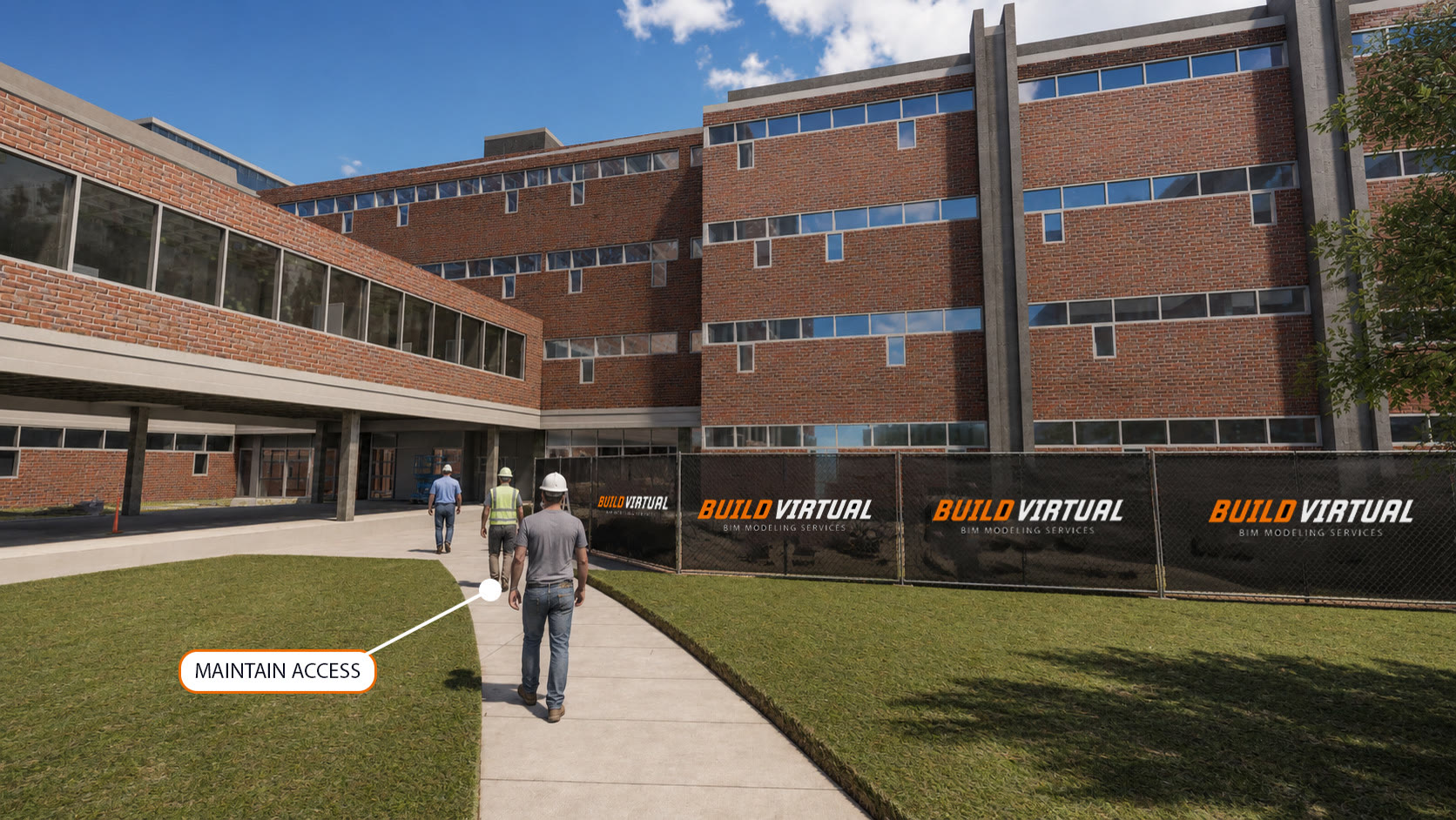
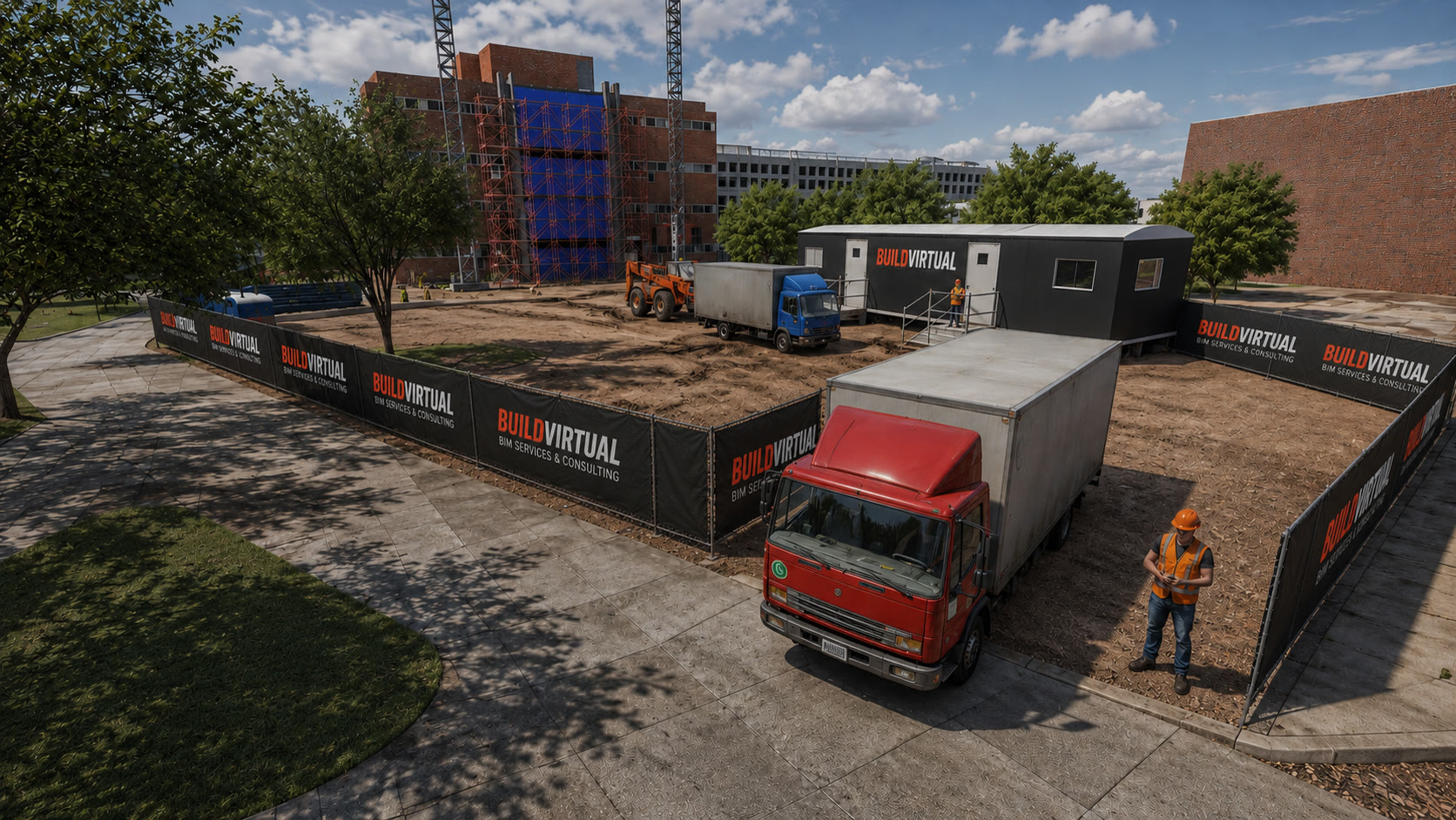
A site logistics animation or exhibit shows crane positions and swing radii, haul routes, laydown and staging, fencing and gates, pedestrian protection, and how the site flows through each phase. When a committee sees that you’ve already worked out how trucks get in and out, where the crane reaches, and how you keep the public safe, you’ve answered the question that keeps them up at night. This is the part of a pursuit I most often see decided by clarity.
Phasing: building around what can't stop
Some of the hardest pursuits are the ones where the owner can’t shut down — a hospital that has to keep treating patients, a campus that stays in session, a facility that has to stay operational while you build next to or on top of it.
Phasing visuals show how you stage the work to protect what’s running: which areas you take when, how you maintain access and egress, where the temporary conditions go, and how each phase hands off to the next. For an owner whose biggest fear is disruption, watching you build around their operation is far more reassuring than reading that you will.
Telling the story in the room
The animation isn’t a video you hand off — it’s a tool your presenter uses to lead the room. The best pursuit visuals are paced and structured so your project executive can talk over them, pause on the moment that matters, and tie each phase back to your team’s experience.
That means the visual has to be made for the interview, not repurposed from a marketing reel: the right length, the right level of detail, the right beats to land your message. A clear, well-paced animation makes your presenter look in command of the project — which is exactly the impression you want the committee to leave with.
4D animation or rendering: which does your pursuit need?
These two get used interchangeably, and they shouldn’t be. They answer different questions, and the right pick depends on what your pursuit is actually being judged on.
Reach for a rendering
when the story is the finished building — design intent, materials, how it sits in its context, the look that gets an owner or board excited. A photorealistic rendering answers “what will it be.” It’s the faster, more affordable option and often the right call for a design-forward interview.
Reach for a 4D animation
when the story is how you build it — sequencing, phasing, and site logistics over time. A 4D construction animation answers “how will you do it,” and it’s what proves you’ve solved a hard site or a complex schedule. On a logistics- or phasing-heavy pursuit, this is the one that moves the panel.
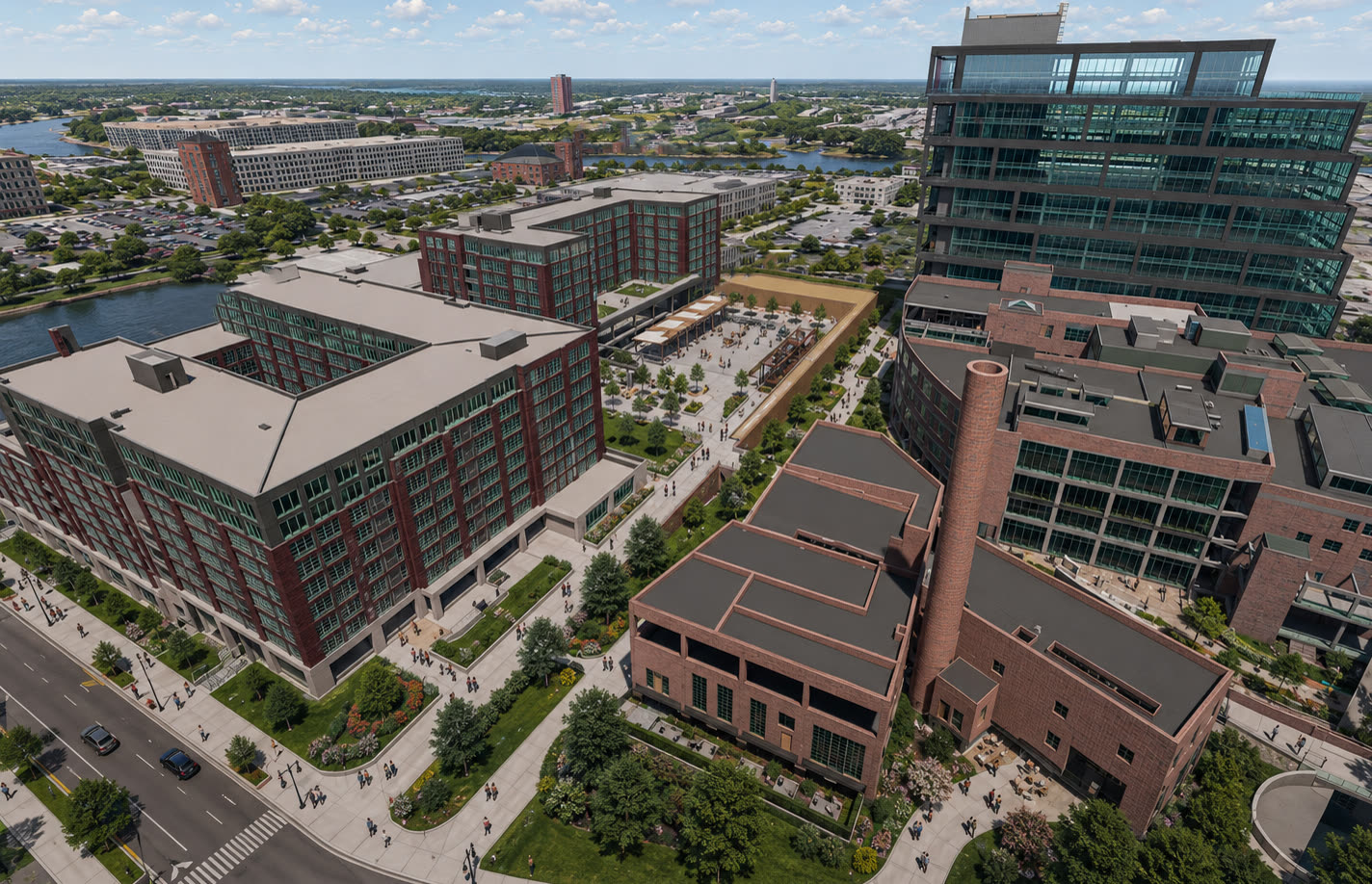
Plenty of pursuits use both: a rendering or two to set the vision, and an animation to prove the execution. If you’re not sure which your interview calls for, that’s exactly the kind of thing I’ll give you a straight read on — sometimes the honest answer is that a couple of strong stills do the job and a full animation would be overkill.
When an animation is worth it — and when it isn’t
I’d rather tell you not to spend the money than sell you a visual that won’t change the outcome. So here’s the honest filter I’d apply to your pursuit.
An animation is worth it when the selection is competitive and qualifications- or interview-based, when the site or phasing is genuinely hard, and when the committee includes people who decide on confidence, not just price. That’s the sweet spot — a close race where believability is the margin, and a project where seeing the plan removes real doubt.
It’s usually not worth it on a pure hard-bid, low-bid job where price is the only thing being scored, or on a site so straightforward that the sequence is obvious to anyone. In those cases the money is better spent elsewhere, and I’ll say so. A visual wins work when it answers a question the committee is actually asking; if they’re not asking it, the visual is just decoration.
When it does fit, the proof that it works isn’t theoretical. I’ve built the visuals that pursuit teams have carried into competitive interviews and won with — including a stadium pursuit that came down to exactly this kind of room. You can see the range of that work on the portfolio, and a bit more about how I approach this comes from having been on the building side of these jobs, not just the screen side.
What I need from you to make one that wins
The fastest, strongest pursuit visuals come from starting early and working from real project logic. If you have a design model and a sequence, that’s the express lane. If you’re earlier than that, I can build from drawings, sketches, and a sequence we develop together — and because I’ve been in the field, I’ll keep that sequence buildable instead of just animated. I walk through that build process step by step in how a 4D construction animation gets built.
The one thing that matters most is your interview date. Pursuit timelines are unforgiving, so the earlier you bring me in, the more we can do and the calmer the run-up is. Reach out as soon as a pursuit looks real, even if the details are still loose — we can shape the rest from there.
Frequently asked questions
Do 4D construction animations actually help win bids?
They help most where the win is close and the committee is deciding who they trust to execute. An animation doesn't replace a strong team or a sharp price — it makes your approach believable. When the panel can watch your sequence come out of the ground, your logistics and phasing stop being claims on a page and become something they've seen work. On a tight, qualifications-based selection, that believability is often the margin.
What's the difference between a rendering and a 4D animation in a pursuit?
A rendering is a still image — it answers 'what will it look like when it's done.' A 4D construction animation adds the schedule dimension: it answers 'how are you going to build it,' showing the sequence, phasing, and site logistics over time. For a design-forward interview a rendering can carry the day; for a logistics-heavy or occupied-site job, the animation is what proves you've thought through the hard parts. Many pursuits use both. You can see each on the construction animations and renderings pages.
When is an animation worth it, and when is it overkill?
It's worth it when the project is competitive, the site or phasing is genuinely hard (tight urban site, occupied facility, complex sequencing), and the selection is qualifications- or interview-based. It's usually overkill on a pure low-bid, hard-bid job where price is the only thing being judged, or on a site so simple the sequence is obvious. I'll tell you straight which bucket your pursuit is in.
How long does a pursuit animation take to produce?
It depends on the length, level of detail, and how much usable model and schedule information you already have. Pursuit timelines are tight, so the honest answer is that it hinges on your interview date and what you can hand me on day one. The fastest path is to reach out as early as you can in the pursuit — request an estimate with your date and scope and I'll tell you what's realistic.
Do you need a finished model and schedule to start?
It helps, but it isn't required. If you have a design model and a sequence, that's the fast path. If you're earlier than that, I can build from drawings, sketches, and a logic-tied sequence we work out together — that's where field experience earns its keep, because the sequence has to be buildable, not just animated. Either way, the goal is a visual that reflects how the job actually goes together.